
Every single activity presents an opportunity to craft the care you wish to receive or extend—from kind words and intentional actions, to taking only what you need and leaving some for another.
This isn’t about being a pushover.
Responding with care and kindness might be exactly what’s needed in a moment; and it’s a powerful choice.
These are ways we show up as individuals. But what does care look like within a system—an organization, a structure, a set of policies and procedures?
Work and life are not separate. They’re deeply intertwined, and they both shape our sense of well-being.
When people feel cared for at work, it shows. Not only in individual performance, but in organizational outcomes. A culture of care isn’t built on perks or surface-level policies. It’s rooted in the lived experience of employees: feeling seen, valued, and significant.
 While organizations are established to meet business goals, not to “care” in the traditional sense, the truth remains: affirming the value of every team member is one of the most powerful ways to drive performance and well-being.
When 30% of employees report feeling invisible at work, we’re missing out. Their talents and perspectives go unrecognized, like discarding a rare gem.
The case for care is both human and strategic. Cultivating well-being requires more than intention; it demands action. It asks us to treat daily decisions and culture-building as living, breathing parts of the organization.
And sometimes, care begins with something as simple as seeing and hearing each other.
Simple, however, does not mean easy. We struggle, individually and collectively, with empathetic listening and deep noticing, even though we know it matters.
This is the place where we go with others, the ever-widening circle. Empathy helps facilitate ethical decision-making, enhances short-term subjective well-being, and allows people to better understand how others perceive them.
As Nguyen reminds us, this kind of care invites expansive solidarity: “defending one’s self while recognizing the demands of others who are excluded… heeding the call for solidarity.” It’s about forming kinship across differences—in an ever-widening circle.
 So how do we see and hear one another in the midst of so much noise?
Noticing someone isn’t the same as seeing them. And seeing isn’t the same as knowing them. Truly seeing another person means paying attention to the essence of who they are—not who we assume them to be. That takes effort. It means examining our own biases and assumptions, and slowing down in a world that urges us to speed up.
In The Power of Mattering at Work, Zach Mercurio says noticing someone requires:
- time and space
- deep attention
- listening for total meaning
- compassionate response
- meaningful follow-up
As a people leader juggling multiple priorities, this might feel like another task. But consider this: care can be a shared responsibility; co-created with your team and shaped to fit your culture.
Start small. Practice the behaviors you want to see. Create a checklist that reflects how you want to show others they matter. That they are seen, heard, and valued.
Then pause. Assess how you’re doing as a leader, and how your team is doing collectively. Adjust as needed. That’s how a culture of care becomes real, grounded in both heart and accountability.
Eric J. McNulty reminds us that “culture and strategy reflect and amplify each other.”
Everything in an organization is connected.
So the question is: What will you prioritize to demonstrate that a culture of care is possible, and necessary?
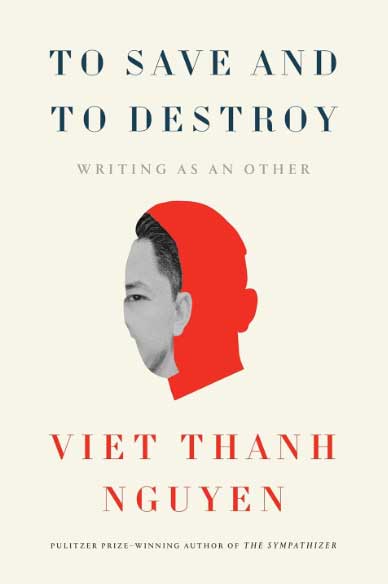 This book brings together the six Norton Lectures Viet Thanh Nguyen delivered at the Mahindra Humanities Center at Harvard University.
The question posed on the cover—“What is a writer’s responsibility in a time of violence?”—extends beyond writers. It challenges all of us who bear witness to violence to consider our role and responsibility.
As an admirer of Nguyen’s work, I know this book will not fail in being provocatively expansive of my understanding of the “other”.
If you’re curious, I also invite you to listen to this powerful reading of the first chapter:
“On the Double, or Inauthenticity”
▶ Viet Thanh Nguyen | To Save and to Destroy: On Writing as an Other | Norton Lecture 1